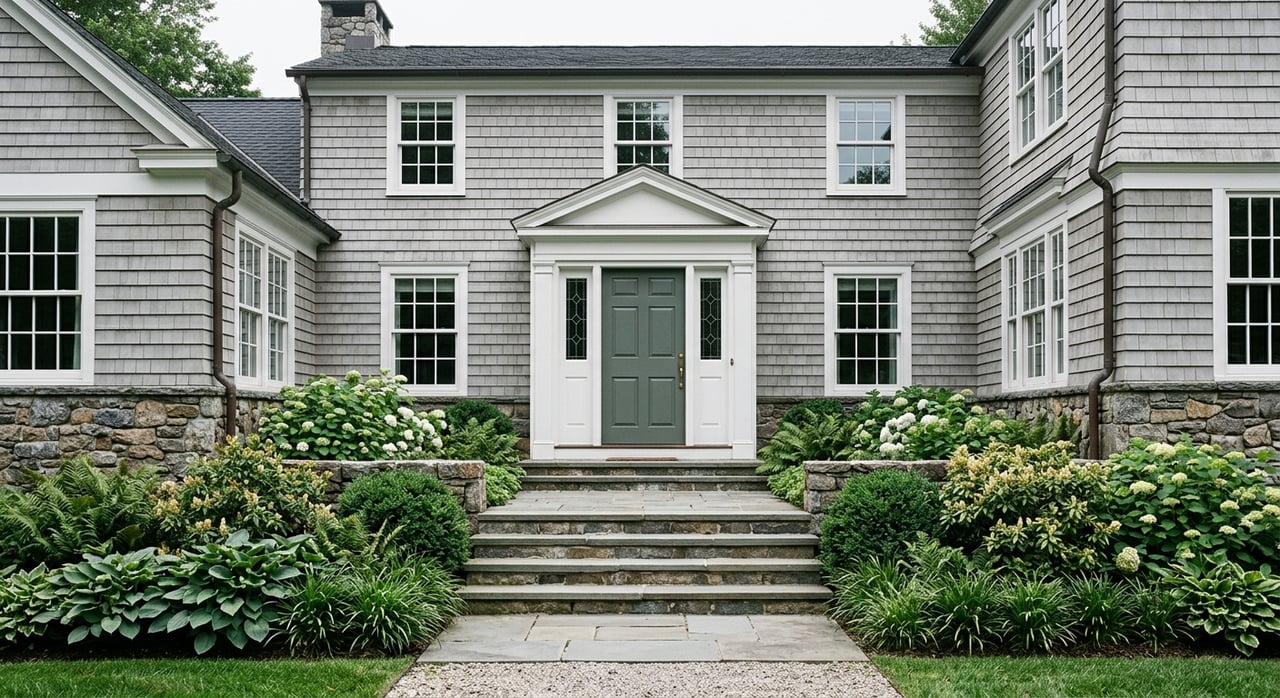
If you own a luxury or estate home in Weston, one question matters more than almost any other: Where should you price it so it attracts serious buyers without leaving money on the table? That can feel especially tricky in a town where homes differ so much in acreage, condition, privacy, and overall presentation. The good news is that smart pricing is not guesswork when you use local evidence and the right strategy. Let’s dive in.
Weston pricing starts with context
Weston is not a high-volume, cookie-cutter market. It is a small residential town with low-density development, two-acre zoning, limited commercial activity, and a strong emphasis on open space and land stewardship.
That matters because luxury pricing here is rarely driven by townwide averages alone. In a market with 10,517 residents, 3,568 households, and a 96.9% owner-occupied housing base, individual home features can influence value just as much as broad market trends.
For estate sellers, that means your pricing strategy should reflect your property’s specific position in the market. A home’s acreage, siting, updates, amenities, and overall readiness often matter more than a headline median price.
Why price per square foot falls short
Price per square foot can be a helpful reference point, but it should never be your main pricing tool for a Weston estate home. Luxury buyers do not purchase square footage in a vacuum.
Appraisers and buyers look at a wider set of factors, including design, condition, landscaping, extra features, views, and recent comparable sales. In Weston, two homes with similar size can land at very different prices because the whole package drives value.
A recent local example makes that clear. One Weston home at 6 Winthrop Hills sold for $2.4 million with 6,684 square feet, while 30 Lords Highway sold for $3.4 million with 6,670 square feet. Similar size did not produce similar value.
Land value depends on usability
In Weston, more land on paper does not automatically mean more value. Buyers are often paying for usable acreage, privacy, and how well the site supports the home and lifestyle.
That distinction is important in a town shaped by conservation priorities and wetlands oversight. If parts of a property are constrained by wetlands, watercourses, or other land-use factors, the market may view that acreage differently than open, functional land.
Weston’s planning framework also helps explain why this matters so much. Roughly 29% of town land is dedicated to open space and recreation, so privacy, setting, and site utility tend to carry real weight in estate pricing.
Condition and updates shape buyer response
Luxury buyers in Weston often compare homes based on how move-in ready they feel. Even in a strong market, deferred maintenance or dated finishes can affect both pricing power and negotiation leverage.
Appraisal guidance also supports this. Physical deficiencies and deferred maintenance are part of the value analysis, which means condition is not just cosmetic. It can influence how buyers perceive risk and how lenders view the property.
That is why polished presentation matters. A well-maintained home with thoughtful updates, strong photography, and a clear market position usually has a better chance to command attention at the right price.
Amenities can move the price needle
At the estate level, buyers often respond to the combination of home, land, and amenity package. Features like a pool, spa, outdoor entertaining areas, geothermal systems, and major renovations can shift a home into a different value bracket.
Recent Weston sales show that clearly. 30 Lords Highway sold for $3.4 million on 2.94 acres and included a pool, spa, outdoor shower, and geothermal heat. By comparison, 10 Pheasant Hill Road sold for $2.475 million on 2.33 acres after a 2016 renovation, and 81 Norfield Road sold for $2.0 million on 2 acres with a 2012 renovation.
These examples are not one-size-fits-all formulas. They do show how buyers in Weston react to a complete offering, not just one feature in isolation.
The best comps may not be obvious
One of the biggest pricing mistakes in a luxury market is relying on a single sale or a narrow set of “close enough” comparables. In Weston, the market can be too thin for that approach.
Over the three months ending in May 2026, only two homes sold in Weston according to the local market snapshot in the research. That is not much data, and it means broad percentage swings can look dramatic without telling the full story.
In a low-sales environment, the best comparable sales may include:
- Older sales with time adjustments
- Homes from a wider geographic area when necessary
- Properties that are not exact matches but share similar design appeal, condition, and buyer profile
- A bracket of comps rather than one headline number
This is one reason local judgment matters so much. A strong pricing strategy often comes from interpreting imperfect but relevant data, not waiting for perfect comps that may not exist.
Why Weston-only comps are not always enough
Sellers often ask whether pricing should rely only on Weston sales. The short answer is no.
In sparse luxury markets, appraisal guidance allows for older sales, more distant sales, and larger market-based adjustments when they are the best indicators of value. The key is not forcing a Weston-only rule when the available sales do not truly reflect your home.
For example, if your property has estate-scale acreage, a high level of renovation, or an amenity profile that is uncommon in town, your pricing analysis may need to reach beyond the most recent nearby closing. What matters is whether the comparison is credible and well reasoned.
Assessments, taxes, and market value are different
Another common source of confusion is the relationship between assessed value, property taxes, and list price. In Weston, they are connected, but they are not interchangeable.
The town assesses real estate at 70% of market value. The current mill rate is 24.57, and the last town-wide revaluation was completed as of October 1, 2023, with the next expected in 2028.
That means your assessment can provide useful context, but it should not be treated as your market value or ideal list price. Buyers and lenders focus on what the market supports now, based on current comparable sales and property-specific factors.
What happens if the appraisal comes in low
This is one of the most important risks of overpricing, especially in a higher-end sale. Even if you secure a contract, the transaction can become more complicated if the appraised value comes in below the agreed price.
When that happens, the deal may require renegotiation. A buyer may need to bring more cash, the seller may need to reduce the price, or the transaction may fall apart.
That is why strategic pricing is about more than generating interest. It is also about setting up the sale so it can hold together through appraisal, underwriting, and final negotiations.
A smarter pricing approach for Weston sellers
In a market like Weston, the strongest pricing strategy usually follows a layered process instead of a simple formula. That process should balance data, presentation, and local market judgment.
A smart approach often includes:
Identifying your true buyer pool
Your likely buyer for a renovated estate with privacy and amenities may be very different from the buyer for a large but more dated property.Building a bracket of relevant comps
Instead of leaning on one sale, use several properties that help establish a realistic value range.Adjusting for land usability and siting
Focus on how the acreage functions, not just the lot size shown on paper.Weighing condition and readiness honestly
Updated, well-presented homes often compete in a different bracket than homes needing work.Testing the price against appraisal logic
Ask whether the number is not only attractive in the market, but also supportable if the buyer finances the purchase.
Why local expertise matters in Weston
Weston’s housing stock is varied, and its market is thin enough that pricing can become highly nuanced. Two-acre zoning, conservation priorities, and a limited pool of direct comps all make the work more specialized.
That is where a boutique, hometown perspective can be especially valuable. When your advisor understands not just recent sales, but also how buyers perceive land, privacy, updates, and estate presentation in Weston, your pricing strategy becomes more precise.
For sellers of luxury and estate homes, that precision matters. The right price helps you protect value, attract the right audience, and move toward a smoother transaction with fewer surprises.
If you are thinking about selling and want a pricing strategy tailored to your home, acreage, and position in the Weston market, connect with Camelot Real Estate for a complimentary home valuation and thoughtful local guidance.
FAQs
How should you price a luxury home in Weston, CT?
- The best approach is to use a bracket of relevant comparable sales and adjust for land usability, condition, design, amenities, and current market conditions rather than relying on one townwide average.
Why is price per square foot less useful for Weston estate homes?
- Price per square foot does not capture the full value of privacy, usable acreage, renovations, views, layout, and special features that often drive buyer decisions in Weston.
Do larger lots always increase home value in Weston?
- No. In Weston, buyers often value usable and marketable acreage more than raw lot size, especially when wetlands or other site constraints affect how the land can be used.
Should sellers use only Weston comparable sales when pricing a home?
- Not always. In a thin luxury market, older or more distant comparable sales may be necessary if they provide the best support for value and are adjusted carefully.
How do Weston property assessments relate to market value?
- Weston assesses property at 70% of market value for tax purposes, so an assessment can provide context but should not be treated as the same thing as current market price.
What happens if a Weston home appraises below the contract price?
- The sale may need to be renegotiated, the buyer may need to bring additional cash, or the transaction could be canceled if the value does not support the agreed price.