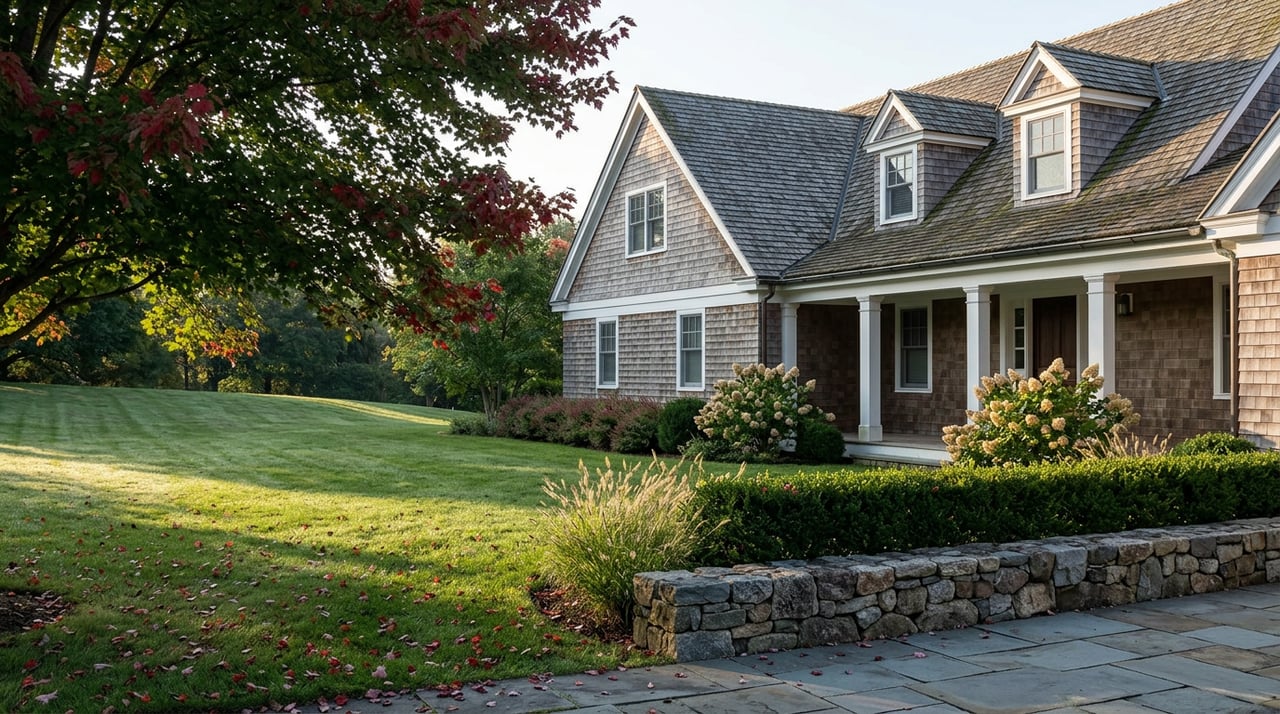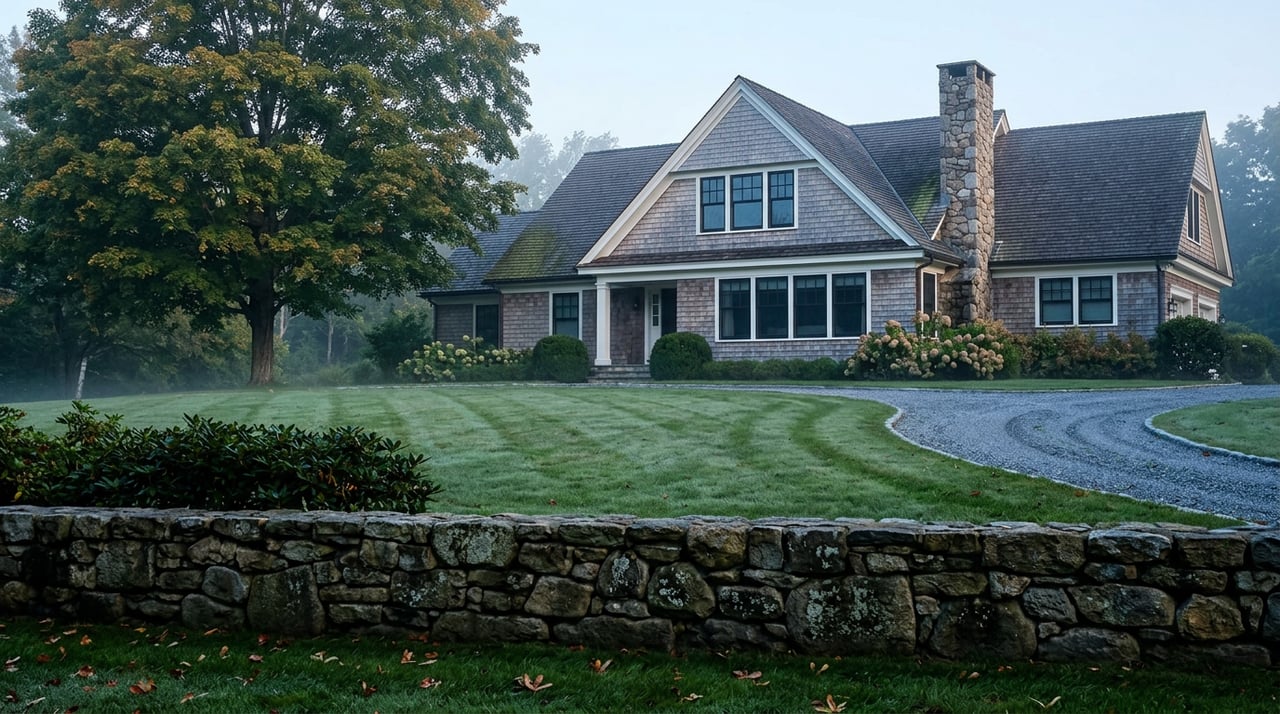
Drive the length of Lyons Plain Road on a weekday morning and you will pass stone walls, a scatter of colonial and colonial revival houses, and enough tree cover to make the whole stretch feel like it has always been this way. No sidewalks. No storefronts. Just land, doing what land does in Weston.
It was not always like this. For roughly forty years in the middle of the nineteenth century, that same road held one of the loudest workplaces in this part of Fairfield County, and a new exhibit at the Weston History & Culture Center explains exactly how loud, and exactly what happened to make it stop.
What's Actually Inside the Barn
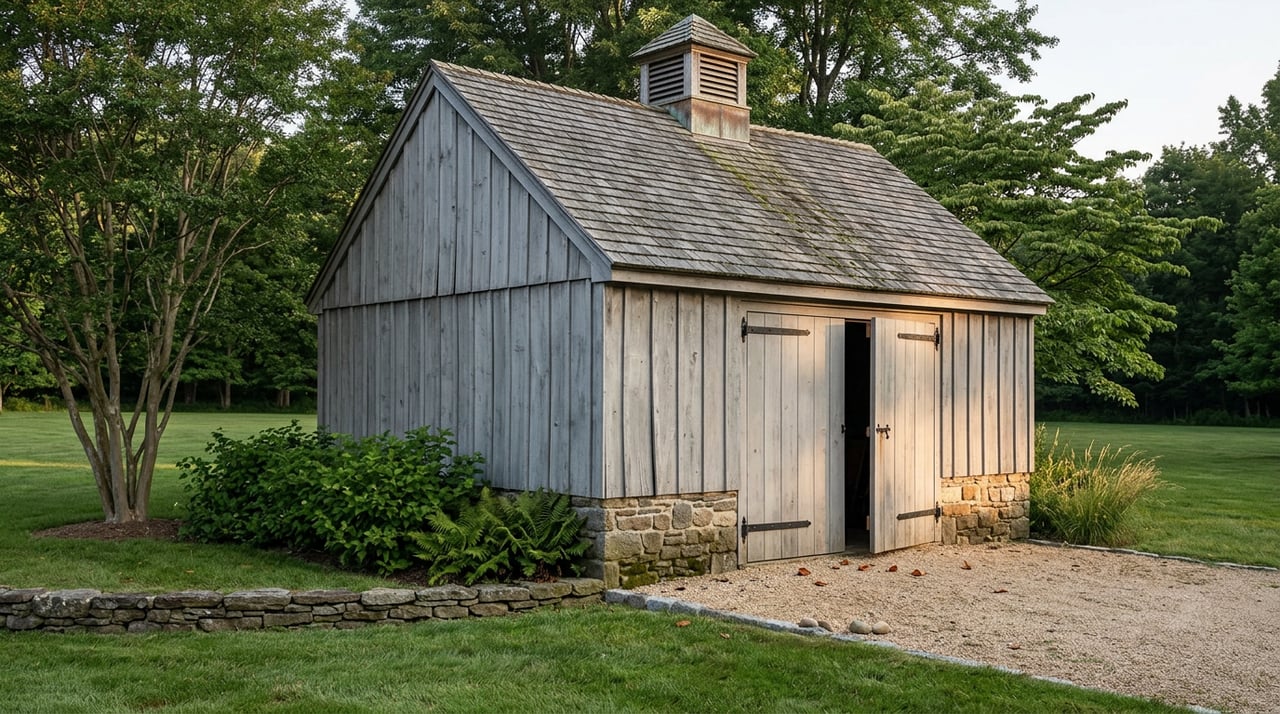
The Coley Barn at 104 Weston Road has been closed to the public for years while the Weston History & Culture Center planned and installed its new interactive exhibit, "Weston at Work." It opened to the public on March 29, 2026, and it is not a glass-case museum experience. Visitors card wool, weave on a working loom, and use a rope-and-pulley system to lift a hay bale, the same mechanical trick a Weston farmer would have relied on before anyone in town had electricity.
The exhibit's more striking choice is what it centers. Rather than a general nod to "farm life," the display uses historic photographs and a set of rare tools from a specific local manufacturer to tell the story of the immigrant workers, African American laborers, women, and children who actually built Weston's working economy. It is a deliberate correction to the version of local history that stops at the farmhouse and never asks who worked the land, or where else in town people worked at all.
That second question has an answer, and it is not the answer most residents driving through Weston today would guess.
Where the Axes Came From
The tools on display in the Coley Barn are Bradley axes, and they were not sourced from a general antiques catalog. They came from the Bradley Edge Tool Company, a real factory that stood less than ten minutes from where the exhibit now sits, on Lyons Plain Road near its intersection with White Birch Road.
Gershom W. Bradley founded the company in 1834 on a site that had previously housed a comb factory, and it grew into serious industrial infrastructure for a town most people now associate with quiet cul-de-sacs and conservation land. By the 1860s, at its peak, the factory employed 70 men making axes, carpenter's tools, knives, and machetes. Residents living miles away in Fairfield and Southport said they could hear the hammers ringing on cold mornings, according to the Fairfield Museum and History Center's photo archive.
The factory burned in 1911 and was never rebuilt. What survives is not a plaque or a historical marker but an actual neighborhood: more than 30 residences built for the company's owners and workers still stand along roughly a third of a mile of Lyons Plain Road, enough physical evidence that the site was added to the National Register of Historic Places in 1995 as the Bradley Edge Tool Company Historic District. If you have ever admired an older farmhouse on that stretch of road without knowing its backstory, there is a real chance you were looking at worker housing from one of Weston's loudest decades.
Why the Roads Went Quiet
Here is the part that reframes how the town's character actually formed. Weston was not always a low-density enclave defined by acreage and privacy. By 1850, the town had nine separate manufacturers. Two decades later, only the Bradley Edge Tool Company was still thriving, and even that would not last past 1911.
Weston also never got a railroad. Every neighboring town that industrialized further did so in part because a rail line gave it a way to move goods and workers efficiently. Without one, nonagricultural business in Weston had no path to scale, and the town's population reflected it, falling from roughly 1,000 residents after the Civil War to a low of 670 by 1930.
That decline is not a footnote. It is the mechanism behind the Weston you actually live in. The wide lots, the absence of a dense town center, the sense that development stopped decades before it did in Westport or Norwalk, all trace back to a specific historical accident: an industrial base that collapsed and a railroad that never arrived to replace it. What reads today as intentional rural preservation started, in large part, as economic stagnation that happened to leave the land alone long enough for later generations to decide it was worth protecting on purpose.
More Than One Century Under One Roof
The Coley Barn is only one stop on the History & Culture Center's 3.7 acre campus, and the other exhibits currently on view extend the same thread in different directions. In the Visitor's Center, "Sarah Treadwell: Connecticut Mom, American Patriot," curated by Mark Brennan with research support from the Historical Society of Easton, tells the story of a North Fairfield woman who supported her family through the Revolutionary War, including the specific pension process widows and veterans had to navigate afterward. A companion exhibit, "Local Patriots and Loyalists of the American Revolution," covers the same period across Weston, Fairfield, Wilton, Norwalk, and Ridgefield, and makes the point that the war divided neighbors along lines that had nothing to do with geography.
The David Dimon Coley House itself, restored and reinterpreted to reflect life in the 1940s, rounds out the picture with a guided tour of a Weston family's home front during World War II, complete with a working rotary phone and a period typewriter. Between the 1770s of the Treadwell exhibit, the 1830s through 1911 of Weston at Work, and the 1940s of the Coley House, the campus covers close to two centuries of who actually lived and labored in this town, which is a considerably more complete picture than most people get from a drive down Weston Road.
Outside, the Daniel E. Offutt III Sculpture Garden offers a lower-key stop if you are visiting with kids who have used up their patience for indoor exhibits. The garden is named for a longtime Weston resident and benefactor whose whimsical sculptures are scattered across the property, and the Offutt Charitable Trust remains one of the center's named supporters alongside Fairfield County Bank.
If You Go
The center's 2026 season runs on a limited but predictable schedule:
- Regular hours: Thursdays, 1 to 4 p.m., plus the first and last Sunday of each month
- Remaining special Sunday hours this summer: August 30, 1 to 4 p.m.
- Location: 104 Weston Road, with parking and the main entrance via High Acre Road
- Admission: Free for members and children 5 and under, $5 for non-member adults, $3 for non-member children
- Closed: Holidays and holiday weekends
The center is a nonprofit, and admission goes toward maintaining the Coley Homestead, the barn, and the archive housed in the Prue Bliss Education Center.
A Different Way to Hear the Road
The next time you drive Lyons Plain Road, the quiet reads differently once you know what used to fill it. This was a working town before it was a preserved one, and the same acreage that now feels untouched was, for a few decades, dense with tenant housing, blacksmith shops, and the sound of tools being forged for farms across the region. Weston's character was not handed down whole. It was built, lost, and then left alone long enough to become what people now move here to find.
If you are curious about how a town's working past shapes what it looks like today, or if you are thinking about what a piece of Weston's land or history might mean for your own next move, Camelot Real Estate is happy to talk through it. Reach out anytime for a complimentary home valuation or simply to talk with Weston's local experts.