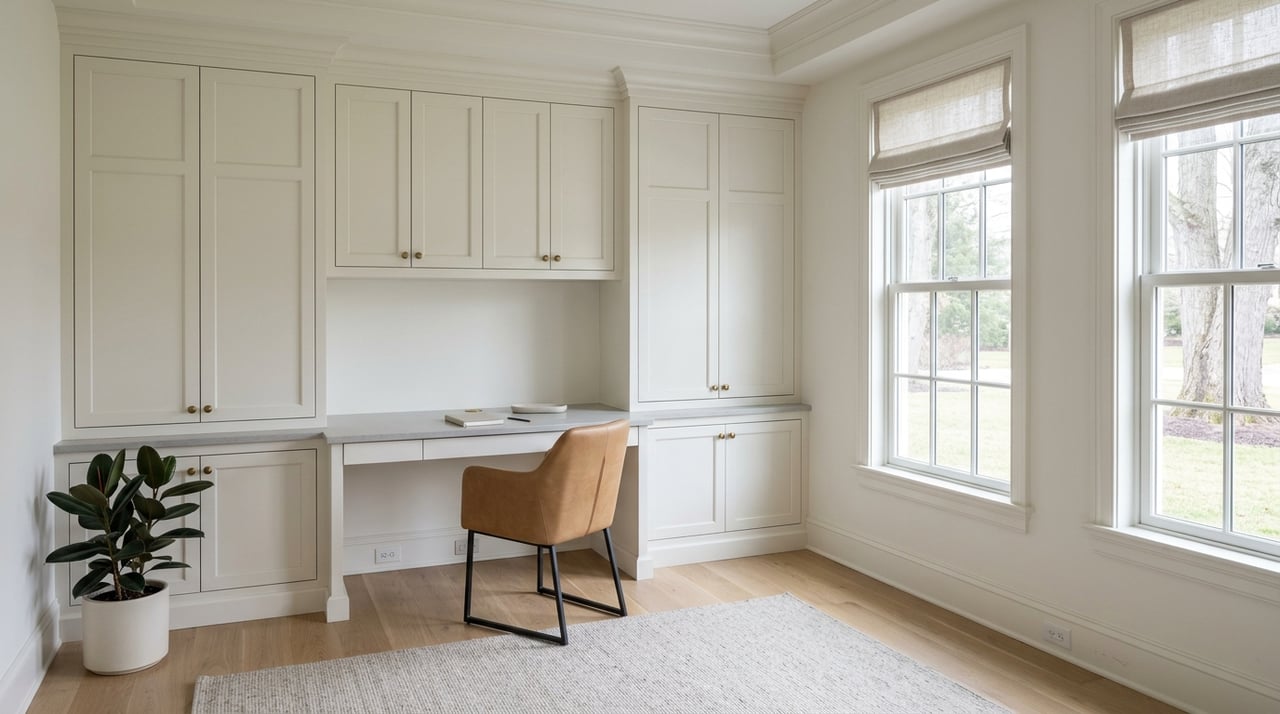
If your workweek splits between home and the office, your house has to do more than look good. It needs to support focus on Tuesday, a smooth train run on Wednesday, and a calmer pace when you return home. In Weston, that balance is a big part of the appeal, and designing for it starts with understanding how the town’s space, setting, and commute options work together. Let’s dive in.
Why Weston Works for Hybrid Living
Weston offers a very specific kind of daily rhythm. The town describes itself as a residential community with two-acre zoning, minimal commercial development, and abundant open space, with town center serving as the main commercial destination and meet-up spot.
For many buyers, that means trading a shorter doorstep commute for privacy, land, and a quieter home base. If you work remotely part of the week, that trade can feel especially worthwhile because your home becomes part office, part retreat, and part launch point for commute days.
This is also a timely conversation, not a passing trend. The U.S. Census Bureau reports that 13.8% of workers usually worked from home in 2023, more than double the 5.7% share in 2019.
Plan Around the Real Commute
Weston does not have in-town rail service, so the most practical commuter setup often combines driving with regional rail. That makes station access, parking habits, and backup options an important part of your home search and design plan.
Know the rail network nearby
MTA service in the region includes stations on the New Haven Line such as Westport, East Norwalk, South Norwalk, and Stamford. The Danbury Branch includes Branchville, Cannondale, Wilton, Merritt 7, and South Norwalk.
The MTA also notes that select rush-hour trains run to and from Grand Central. At other times, Danbury Branch riders typically transfer at South Norwalk for Grand Central service.
Consider drive-plus-transit routines
For some households, the best setup is not simply driving to a train station. CTDOT’s Southwestern Connecticut transit guide notes commuter connections from South Norwalk Railroad Station to Merritt 7/Glover Avenue, Norwalk Hospital/Belden Avenue, and 10/20 Westport Road.
In Westport, commuter connections serve Westport Saugatuck Railroad Station, Green’s Farms Railroad Station, Pepperidge Farm, Norden, Nyala Farms, Imperial Avenue Lot, and local neighborhoods. If your job takes you to a regional office before or after rail travel, these connections can shape which route feels most workable.
Use park-and-ride as a backup plan
Commute design should include a fallback. CTDOT says state park-and-ride lots are open 24 hours a day, seven days a week, on a first-come, first-served basis, and are free except at railroad stations.
Nearby examples include Norwalk’s Route 15/Route 123 lot, Westport’s Route 15/Route 33 lot, and Wilton’s Route 7/Wolfpit Road lot. Even if you do not use these every week, they can add flexibility when schedules change.
Design the Home Around Workdays
If you only commute a few days each week, your home office stops being an afterthought. It becomes one of the most used spaces in the house, which is why layout matters as much as finishes.
Prioritize a dedicated workspace
CDC/NIOSH recommends a workspace where noise, lighting, and temperature can be controlled. That guidance supports what many hybrid buyers already know from experience: a dedicated room usually works better than a laptop setup at the kitchen island.
In Weston, that often means looking for an enclosed office, a quiet flex room, or a layout with enough separation for focused work. The town’s low-traffic, open-space setting can help support that sense of calm, but the room itself still needs to function well day to day.
Think beyond one desk
Many households need more than a single office. If two adults may work from home at the same time, a second work zone can make a major difference.
That second zone might be a finished lower level, a study off the primary bedroom, a bonus room over a garage, or a flexible guest room with built-in storage. The goal is simple: enough separation for video calls, privacy, and daily workflow without constant overlap.
Focus on comfort and function
NIH guidance says a workstation should support a neutral, comfortable posture, and OSHA notes that poorly set up computer workstations can create injury risk. In practical terms, that means the best home office is not just quiet, but also easy to use for long stretches.
When you evaluate a space, pay attention to:
- Natural light and glare control
- Noise separation from main living areas
- Wall space for storage or built-ins
- Room for a proper desk and task chair
- Comfortable temperature control
- Reliable placement for internet equipment
These details often matter more than decorative upgrades. If a room supports focus, comfort, and call quality, it will likely add more daily value than a trend-driven feature you rarely use.
Match Layout to Your Weekly Routine
The best Weston home for commuters and remote workers is the one that fits your actual schedule. A great layout on paper may still feel frustrating if it does not support how your household moves through the week.
First-floor office vs. lower level
A first-floor office often works well if you want easy access near the main entry or need a clean separation from bedrooms. It can also make early departures and late arrivals feel simpler, especially when your commute days start before the rest of the house is active.
A finished lower level may offer stronger sound separation and room for a larger work setup. That can be helpful for households juggling calls, school schedules, fitness equipment, or creative work that needs more elbow room.
Flex rooms can solve more than one need
A separate flex room can be a smart middle ground. It may function as an office now, then shift into guest space, a study room, or a library over time.
In Weston, where buyers often value space and long-term usability, flexible rooms can make a property work for both current routines and future changes. That matters when hybrid schedules evolve or family needs shift.
Do Internet Due Diligence by Address
One of the most important parts of designing a commuter-friendly home happens before you move in. Internet service should be treated as an address-level due diligence item, not something you assume based on the neighborhood.
The FCC says its National Broadband Map is designed to be searched by address or location, and Weston’s utility page lists Eversource, Southern Connecticut Gas, Frontier, and Cablevision. Frontier and Optimum also direct users to check availability by address.
Before closing, confirm:
- Available providers at the exact property
- Upload and download speeds
- Reliability for video calls and large files
- Equipment placement options inside the home
- Backup options if service is interrupted
This step matters just as much as room count if your work depends on stable connectivity. A beautiful office is only useful if the service behind it supports your day.
Let the Setting Support Your Week
Part of Weston’s appeal is not only the house itself, but how the broader setting shapes daily life. When work wraps up, access to open space can help create a stronger boundary between office time and personal time.
The town highlights places such as Lachat Town Farm, Bisceglie-Scribner Park, Morehouse Farm Park, Keene Park, and Lucius Pond Ordway-Devil’s Den Preserve. The preserve is described by the town as a major tract of protected land with terrain suited to hiking and bird-watching.
For many hybrid households, that kind of setting adds real value. It can make a lunch break, an early-morning walk, or an after-work reset feel easier to build into the week.
What to Look For in a Weston Home
If you are searching in Weston with commuting and remote work in mind, a few priorities tend to rise to the top quickly.
A practical buyer checklist
- A dedicated office or quiet flex room
- Space for a second work area if needed
- Clear separation between work zones and active living areas
- A realistic drive to your preferred station or park-and-ride option
- Strong internet availability confirmed at the exact address
- Storage for work equipment, bags, and daily commute items
- A layout that supports both privacy and long-term flexibility
These features help turn a home into a true hybrid-work base. In Weston, that often means using space, acreage, and regional access in a thoughtful way rather than expecting everything to be right outside your door.
If you are weighing commute tradeoffs, comparing layouts, or narrowing in on the right section of town, local context matters. Camelot Real Estate brings a hometown perspective to Weston buyers and sellers who want a home that fits the way they actually live and work.
FAQs
What makes Weston a good fit for commuters who work from home?
- Weston offers a residential setting with two-acre zoning, minimal commercial development, and abundant open space, which can appeal to buyers who want privacy and a quieter home base while commuting on selected days.
Which train options are most relevant for Weston commuters?
- Nearby rail options include New Haven Line stations such as Westport and South Norwalk, along with Danbury Branch stations such as Branchville, Cannondale, Wilton, and Merritt 7, depending on your route and schedule.
Should a Weston home have a first-floor office or a lower-level workspace?
- A first-floor office can make daily access easier, while a lower-level workspace may offer better sound separation, so the right choice depends on your routine, privacy needs, and how many people work from home.
Why should Weston buyers verify internet service by address?
- Internet availability can vary by property, and the FCC broadband map and local providers both direct users to check service at the exact address rather than assuming coverage across a wider area.
Are park-and-ride lots near Weston useful for commuters?
- Yes, nearby CTDOT park-and-ride lots in Norwalk, Westport, and Wilton can provide added flexibility because they are generally open 24 hours a day, seven days a week, on a first-come, first-served basis.